Want an overview of all the types of digital signage?
Digital signage is made up of lots of different components, and there’s an almost endless number of variations of what can be used, and how. Different people refer to them in different ways, which can also be confusing.
Our guide covers the seven most important types of digital signage display that you’re likely to encounter, and gives you a short overview on each. We also clarify the screen size categories, which you may hear being referred to.
(NB: If you’re interested in what digital signage is check out this article & infographic
Screen types
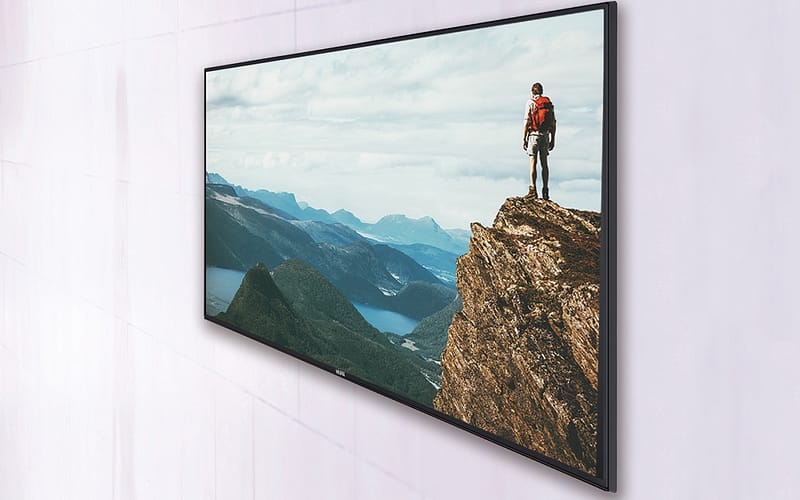
LCD screen
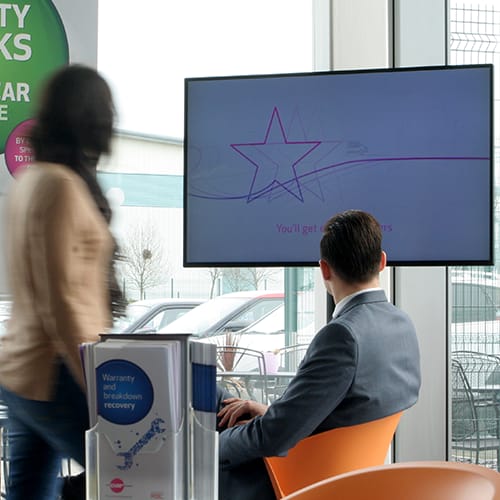
These are standard definition, flat panel screens. They come in a range of sizes in small and large format. These are the cheapest type of commercial digital signage screen.
They tend to have good picture quality but have low brightness so they’re less vivid than high definition screens. This generally makes them less suitable for outdoor use. They also tend to be less energy efficient and have the shortest screen life.
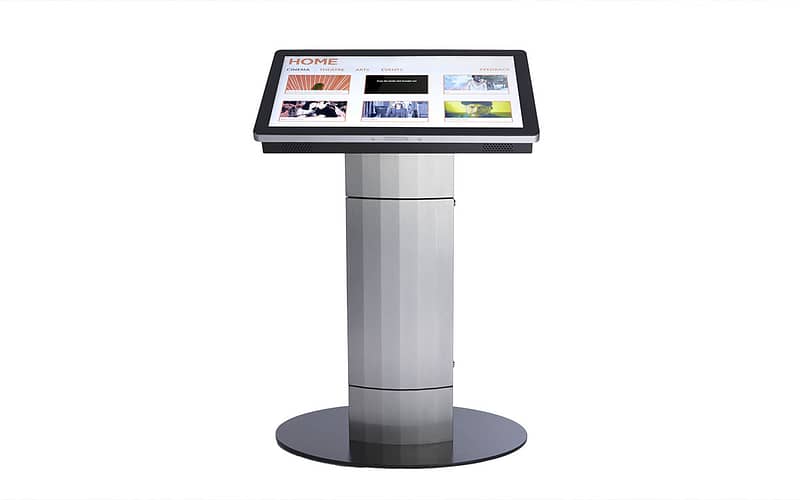
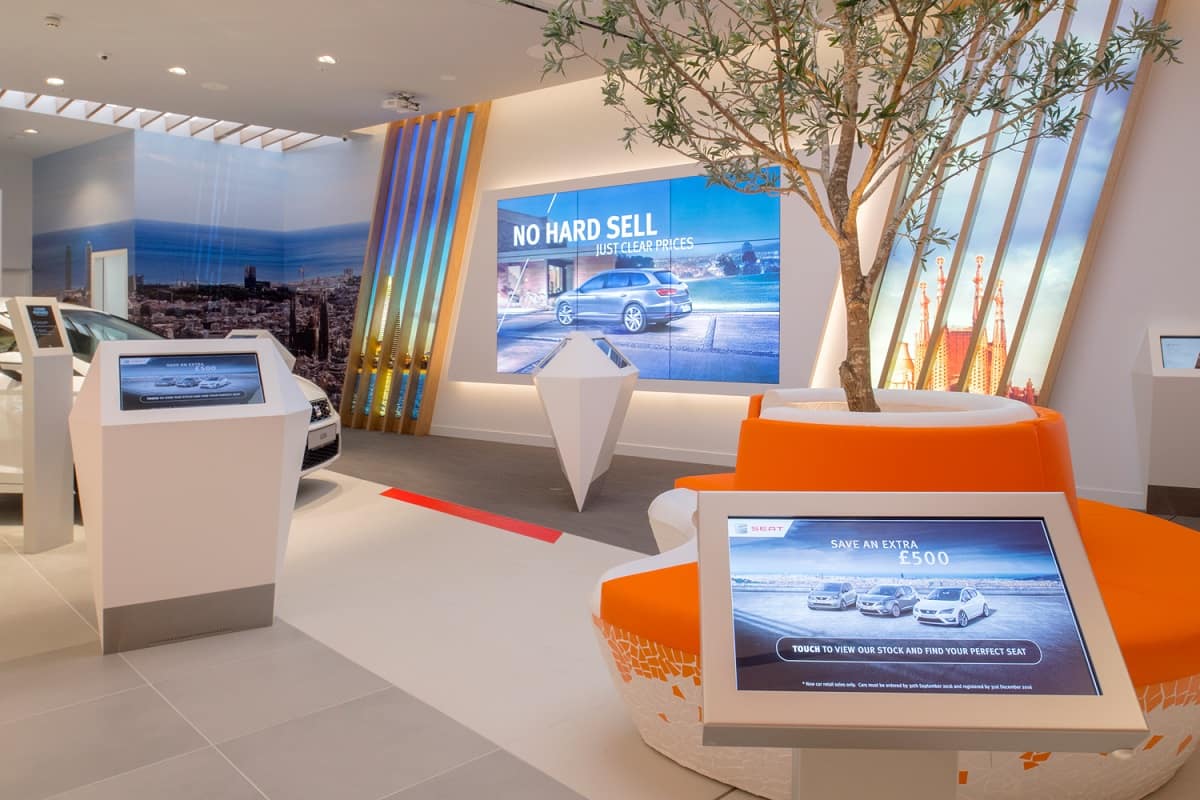
They are available as interactive (touchscreen) or display only models.
LED screen
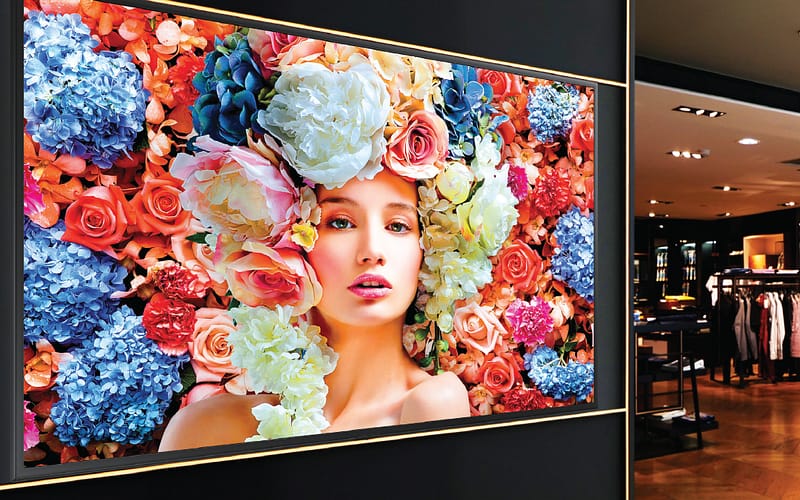
These are flat panel screens with a higher definition than LCD. They are usually in small and large format in the same range of sizes as LCD screens. They are brighter than LCD screens, but tend to use less energy. They have a much longer screen life – almost double that of an LCD screen.
They are available as interactive (touchscreen) or display only models.
NB: OLED screens are available for commercial use, but are used less frequently.
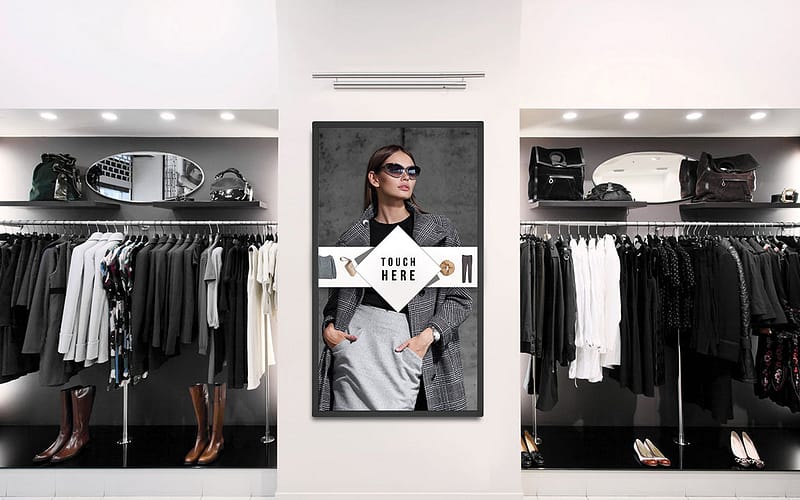
Touchscreen
Most touchscreen displays are an LCD or LED screen with a special coating on the screen which uses the human body’s ability to conduct electrical currents to register the point where your finger is making contact with the screen. Touchscreen devices need special software to connect up the content on screen and the data regarding your touch locations.
It is possible to add an overlay to a standard screen to give it touchscreen capability.
High bright
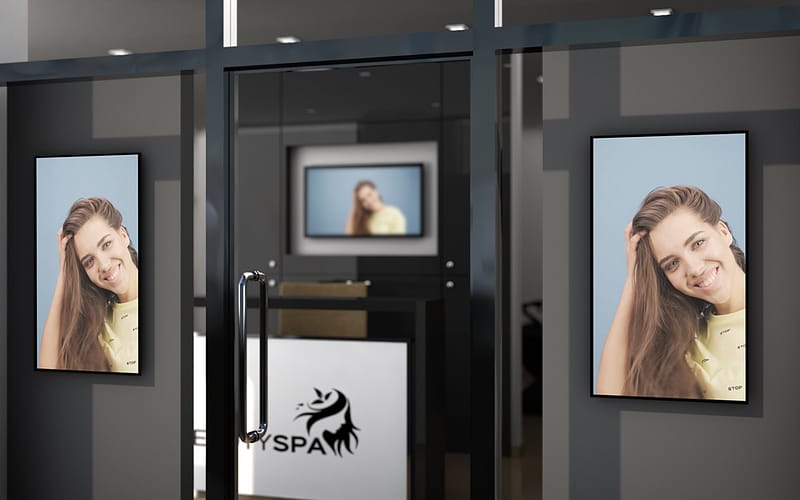
High bright screens can be up to eight times brighter than a standard large format screen and are used for window displays and outdoor signage to counteract the glare of the sun on the screen which can make it harder to see on-screen content.
The brightness of the screen is measured in candela, which refers to the luminous intensity emitted by a point light source in a particular direction – a single unit is roughly the equivalent of the light that a single candle would produce. They tend to range in brightness from 1000 cd/m² to 3000 cd/m², but they can be as low as 700 cd/m² or as high as 7000 cd/m².
They can be LCD or LED screens.
Large display types & their uses
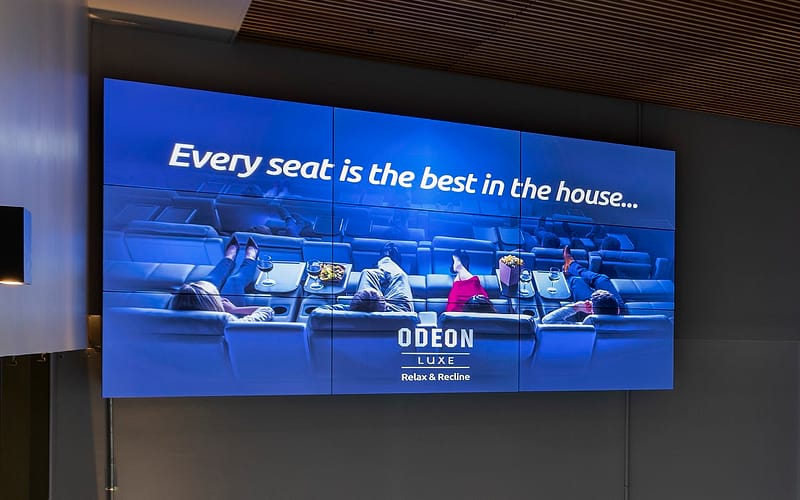
Video wall
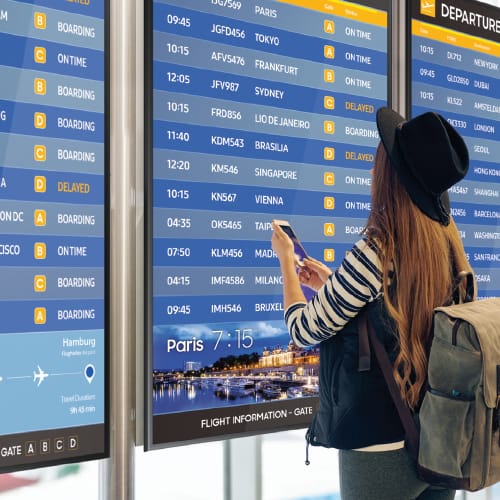
A video wall is a series of at least four small screens (each is usually 1m x 1m) that are positioned together like tiles, and synchronised so they form a larger display, and act together as a single screen. For this reason, video walls can be almost any size or design, but they tend to start in size from 2m x 2m.
They are the cheapest way of creating a large display and offer lots of flexibility, however, if one screen within the display fails, it renders the whole video wall unusable. They can only be used indoors.
LED walls
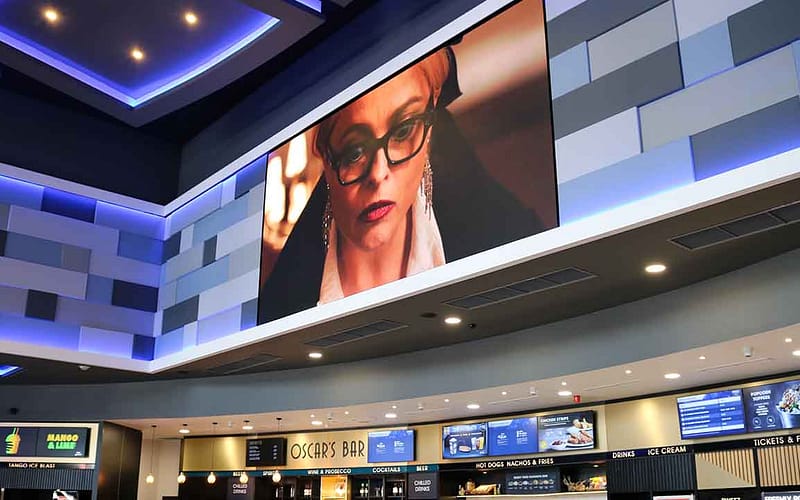
LED walls are high definition displays and are generally 85 inches* or larger. They are made up of a series of tiles or panels containing LEDs which are slotted together to create a seamless display with no bezels. This makes them easier to maintain because if one panel is faulty, it can simply be replaced.
They are very flexible because they be any size or dimensions. They can be flat or curved and used indoors or outdoors (though specialist hardware is required for outdoor use). They are very vibrant and give high definition, making it easier to see on-screen content more clearly when close up or further away. However, this depends on the pixel pitch* of the LED panels purchased (NB: a smaller pixel pitch is needed if people will be viewing LED walls in close proximity).
Whilst they are more expensive then LCD/LED screens to purchase, they are easier to maintain and therefore tend to be more cost-effective over time.
*Pixel pitch refers to the density of the LEDs within a panel.
Other types
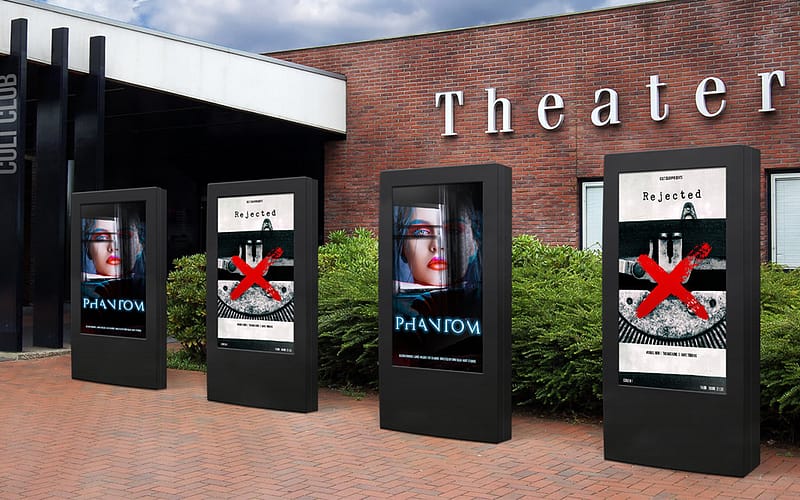
Displays within an enclosure
There are three key types of digital signage display contained within an enclosure:
Despite appearances, these are simply a screen plus other hardware (e.g. media player, cabling) all contained within different types of protective cabinet. By using a different enclosure they can often fit into more than one category – e.g. a freestanding kiosk for outdoor use.
Screen categories & their uses
Small format screens
Small format or SFD (small format display) relates to screen sizes of less than 20 inches*. This is only for use by a single person at a time. It is used in situations like car showrooms, to display a meeting room’s occupancy status, or at the side of an escalator/lift.
Large format screens
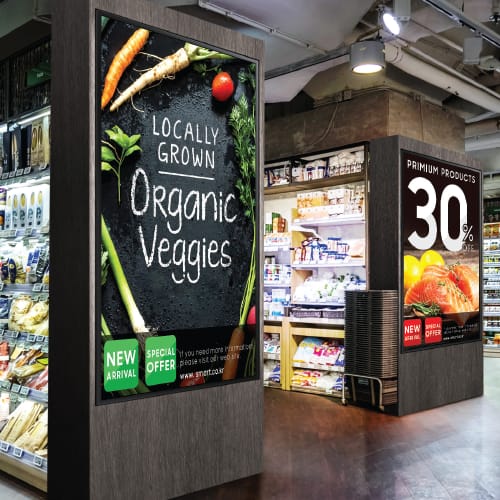
Large format or LFD (large format display) refers to screens ranging from 20-100 inches*. These tend to be located in areas of high footfall such as retail stores, shopping centres, or cinema foyers to enable around 10 to 30 people to view the same content simultaneously. Large format screens should not be confused with large format LED walls, which are usually much larger.
NB: *screen sizes are measured diagonally across the display and do not include the housing around the screen.